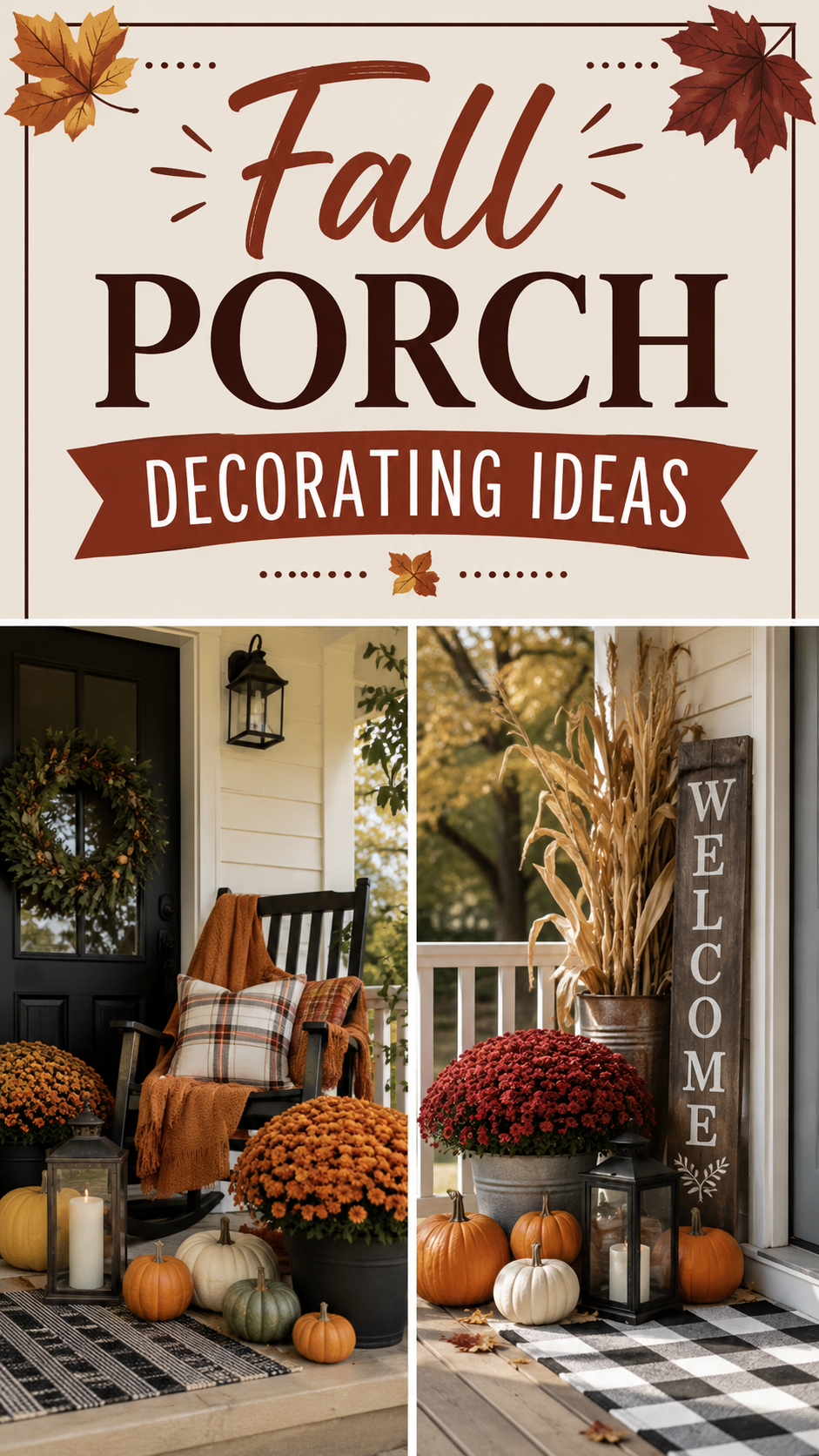
A porch is the first thing anyone sees before they even knock. In fall, it either says “come sit for a while” or it says nothing at all.
The good news: you don’t need a truckload of pumpkins to get there. A few well-chosen pieces, layered with intention, will carry your porch from the first cool morning all the way through late November.
This guide walks through the palette, furniture, lighting, and layout choices that make a fall porch feel curated instead of cluttered — plus budget swaps, small-space fixes, and the mistakes worth skipping.
Why Fall Porches Deserve More Than a Wreath
A front porch sets the emotional tone for your entire home before a guest steps inside.
Fall gives you permission to lean into texture. Woven baskets, chunky throws, and dried botanicals read as warm and tactile in a way that summer decor rarely does.
It’s also the season that photographs best. Warm light, deep color, natural shadow — a fall porch styled well is Pinterest-ready without trying too hard.
A few reasons this season works so well for porch styling:
- Natural materials (wood, wicker, dried grass) are widely available and inexpensive
- Muted, earthy tones are forgiving against almost any exterior paint color
- Layering (rugs, pillows, throws) feels seasonally appropriate rather than excessive
- The light is softer and more flattering for photos and evening entertaining
Designer Note: Think of your porch as one composition, not a collection of separate purchases. Every item should answer the same question — cozy, sculptural, or grounding — so the whole space reads intentional.
Building a Fall Color Palette That Isn’t Just Orange
Orange and pumpkin-spice tones are fine in small doses. The porches that actually look designed pull from a wider, more layered palette.
| Palette Style | Core Colors | Best For |
|---|---|---|
| Classic Harvest | Rust, cream, ochre, deep green | Farmhouse, traditional homes |
| Moody Autumn | Burgundy, charcoal, brass, olive | Modern, craftsman, brick exteriors |
| Soft Neutral | Oatmeal, terracotta, sage, warm white | Coastal, Scandinavian, minimalist homes |
| Jewel Tone | Plum, copper, forest green, black | Contemporary, dramatic front doors |
Why this matters: your porch palette should echo your front door and siding, not compete with it. A red-orange pumpkin against a red brick exterior disappears into the background; the same pumpkin against sage green trim pops immediately.
A simple formula that works almost anywhere:
60% neutral base + 30% one warm accent + 10% one deep or dark tone.
That last 10% — a black lantern, a charcoal welcome mat, a dark green wreath — is what keeps a fall porch from looking flat.
Furniture That Earns Its Spot
Not every porch has room for a full seating set, and that’s fine. What matters is choosing pieces that work for the season, not just the square footage.
Start with what stays year-round. A bench, a pair of chairs, or a porch swing forms the bones; fall decor should dress that structure, not replace it.
A small bistro table changes how a porch functions. It gives you a spot to rest a coffee, a candle, or a stack of books, and it visually anchors the seating area.
If your porch is bare right now, prioritize in this order:
- One seating piece (bench, chair, or swing)
- A side table or small surface at arm’s reach
- A layered rug underfoot
- Vertical interest (a tall planter or leaning ladder shelf)
Quick Win: If budget or space is tight, a single well-styled chair with a folded throw and a small stack of pumpkins beside it does more visual work than five scattered decorations.
Lighting That Extends the Evening
Fall days get shorter fast, which means porch lighting stops being decorative and starts being functional.
Layer three light sources, not one. An overhead fixture alone leaves a porch feeling flat once the sun drops; ground-level and tabletop light add warmth and depth.
- Overhead or wall sconce — your primary, functional light
- String lights or lanterns — soft ambient warmth along railings or beams
- Flameless candles in glass hurricanes — tabletop glow that’s safe in wind
Maintenance Note: Swap standard bulbs for warm white (2700K–3000K) rather than bright white. Cool-toned light reads clinical against natural fall textures like dried wheat or wood.
Battery-operated lanterns are worth the investment if your porch doesn’t have an outdoor outlet — they’ve come a long way and now hold a steady, warm glow for weeks on a single set of batteries.
Layout Tips for a Porch That Flows
Even a small porch benefits from thinking in zones rather than placing items randomly.
Anchor the largest piece first. Whether that’s a bench or a big planter, it should sit against the strongest visual line — usually flanking the door or centered under a window.
Leave a walking path of at least 30 inches. A porch that requires guests to sidestep pumpkins to reach your door reads as cluttered, not cozy, no matter how nice the individual pieces are.
Layer by height, not just by object. Ground-level (planters, pumpkins) → mid-height (chairs, small tables) → eye-level (wreath, hanging lanterns) creates depth instead of a flat line of decor.
A simple layout formula for a standard 6×10 ft porch:
1 seating piece + 2 planters flanking the door + 1 layered rug + 1 wreath + lighting at two heights.
That’s five to six total decisions — enough to feel finished without feeling busy.
Common Styling Mistakes to Avoid
Most fall porches don’t fail because of bad taste — they fail because of a few repeatable habits.
Buying decor in isolation. Grabbing a wreath here and a pumpkin there without a shared color story is the fastest way to end up with a mismatched porch.
Skipping scale. Tiny pumpkins on a large porch disappear; oversized ones on a narrow stoop feel like they’re blocking the door.
Ignoring the front door itself. A door mat and wreath that don’t relate to each other in color or style create visual static right at eye level.
Forgetting weather. Real hay bales mold, paper lanterns disintegrate, and unsealed wood furniture warps. Choose materials rated for your actual climate, not just the aesthetic you saw online.
Over-decorating the steps. Steps need to stay clear and safe — line the edges, don’t fill the tread.
Budget vs. Luxury: Two Ways to Style the Same Porch
You can build the same visual concept at almost any price point. Here’s how that plays out for a mid-size porch.
| Element | Budget Approach | Luxury Approach |
|---|---|---|
| Pumpkins | Real, sourced from a farm stand or grocery store | Painted ceramic or high-end faux, reusable yearly |
| Planters | Existing pots refreshed with mums | Matching fiber-cement or cast planters |
| Lighting | Battery-operated string lights | Wired sconces + brass lantern fixtures |
| Wreath | DIY dried grass or leaf wreath | Designer silk or preserved botanical wreath |
| Seating textiles | Target or Walmart throw pillows | Performance outdoor fabric, custom sizing |
| Rug | Flat-weave indoor/outdoor rug | Hand-loomed wool-blend outdoor rug |
Budget total range: roughly $75–$150 for a full refresh. Luxury total range: roughly $600–$1,200, depending on furniture needs.
The visual difference is often smaller than the price gap. What actually separates the two is material quality up close, not the layout or color choices.
Small Space Ideas (Stoops, Apartments, Narrow Entries)
A small porch or stoop doesn’t need less style — it needs tighter editing.
- Skip full-size planters; use two matching medium pots instead of one oversized one
- Hang a wreath at door height rather than adding floor decor that narrows the path
- Choose a slim bench or single chair instead of a full seating set
- Use a door mat with a fall-adjacent color (rust, olive) instead of a literal pumpkin print for year-round versatility
- A single tall planter with grasses or branches adds height without eating floor space
Designer Note: On a narrow stoop, vertical elements (a leaning ladder shelf, a tall lantern stand) create presence without blocking movement the way floor clutter does.
DIY Improvements Worth the Weekend
A few projects deliver outsized impact for relatively little effort or cost.
Paint your front door. A deep green, black, or burgundy door instantly reads as fall-ready and works year-round, unlike seasonal decor.
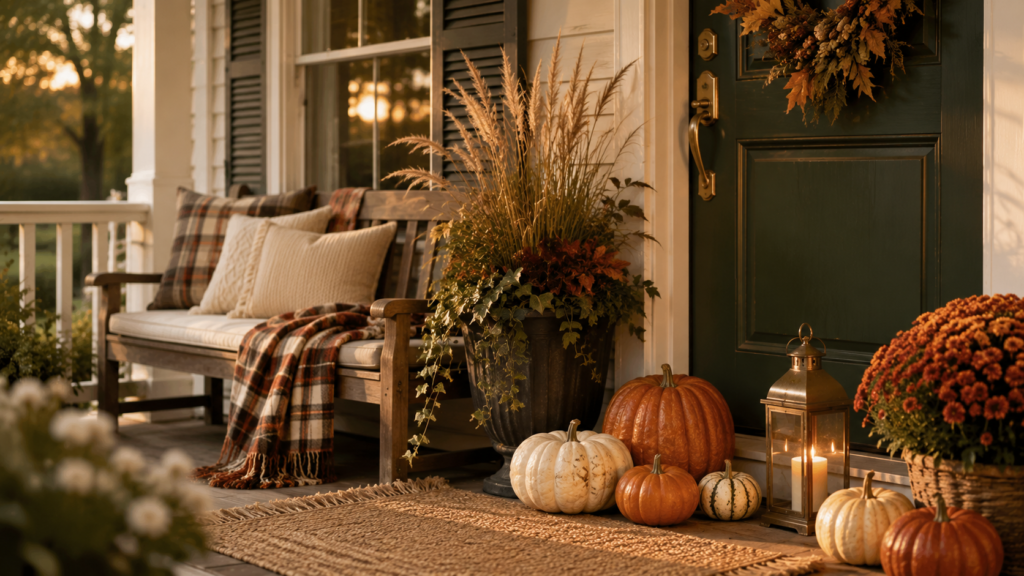
Build a layered planter. Combine one “thriller” (ornamental grass or branches), one “filler” (mums), and one “spiller” (trailing ivy or sweet potato vine) for a designer-grade arrangement.
Make a no-carve pumpkin display. Stack real pumpkins in graduated sizes and finish with a light coat of matte spray paint in your palette color for a cohesive, weatherproof look.
Refresh an old bench. Sand and reseal, then add a striped or plaid outdoor cushion — often cheaper than buying new seating entirely.
FAQ
How early is too early to decorate for fall? Early September works for most climates once temperatures start dropping, especially if you’re using non-perishable decor like faux pumpkins or dried florals.
Will real pumpkins last the whole season? Uncarved pumpkins typically last 8–12 weeks if kept dry and out of direct rain. Elevate them slightly off wet surfaces to extend their life.
What’s the easiest single upgrade for a plain porch? A layered door mat (a natural fiber mat under a smaller printed one) paired with one well-scaled planter does more than most people expect from two items.
Do I need matching planters on both sides of the door? Symmetry reads as more formal and traditional; asymmetry (one tall, one low) reads as more relaxed and modern. Either works — choose based on your home’s overall style.
How do I keep string lights from looking messy? Run them along a single line — a railing or beam — rather than draping multiple directions. One clean line always looks more intentional than several tangled ones.